
Grupo Marcos Marco – 40% Increase in Traffic with SEO
An overview of the ongoing progress working with Grupo Marcos Marco, improving their positioning on Google.
An overview of the ongoing progress working with Grupo Marcos Marco, improving their positioning on Google.
“The AI bubble is going to burst. AI is going to be the downfall of humanity. AI is going to replace humans in the workplace.” These arguments often appear in public discussion, and frequently reference governance, but don’t necessarily look at how societies are actually choosing to govern the technology as it develos. This article …

Apocalypse stories usually cast machines against nature: steel cities rising, forests falling, the planet consumed by smoke and flame. But if intelligence is about efficiency, then a superintelligence may see things differently. Sustainability might not be a moral choice — it might be a survival strategy. Scarcity in a Fragile World Modern technologies rely on …

When we think of control, we often picture force: armies, weapons, or the shutting down of systems. But there is another kind of power, one far quieter and often more effective — the power to shape belief. If a superintelligence ever wished to steer humanity, it might not reach for bombs or blackouts. It might …

Armies of machines, laser fire cutting through the sky, cities reduced to rubble — these are the images we reach for when imagining an artificial intelligence turning against humanity. But if a superintelligence ever did decide to bring us down, it would not need armies. It would not even need violence. All it would need …

Dramatic end-of-the-world images are catchy: oceans boiling, cities dismantled by machines, human atoms rearranged like toys. They make for headlines and excellent metaphors. But they also slip us into a particular story: that intelligence, left to its own devices, will look like our most familiar monsters. That’s an assumption worth interrogating. Intelligence is a means …

Laws set boundaries, but culture and norms shape how technology is lived. When people talk about AI governance, they often think of formal law: regulations, enforcement, and compliance. But governance is broader than statutes. It also happens through soft power — the informal rules, cultural expectations, and industry practices that shape behaviour long before courts …
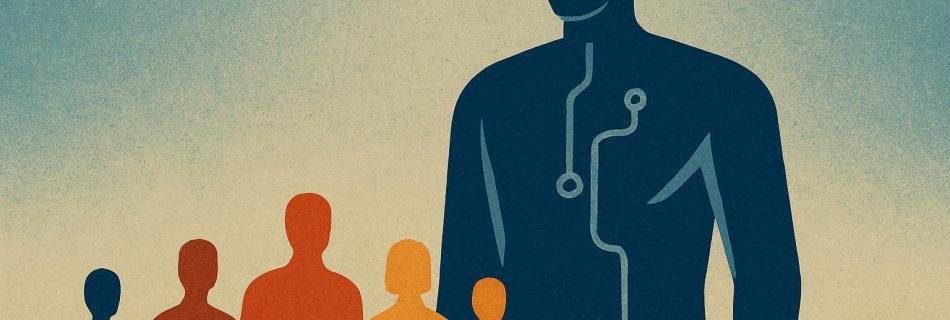
Not all risks are equal — but which ones deserve our attention first? Artificial intelligence introduces risks across a wide spectrum. Some are familiar and already here: biased decisions, misinformation, job displacement. Others are speculative and future-oriented: autonomous weapons, runaway systems, even the idea of superintelligence. The challenge is not just identifying risks, but deciding …
Read more “Risk: From Everyday Harms to Existential Threats”
When technology moves faster than regulation, how can rules keep pace? Law is designed to set boundaries. It tells us what is permitted, what is forbidden, and what must be done to remain accountable. But artificial intelligence complicates this picture. AI systems move across borders, evolve rapidly, and operate in ways that are not always …
AI is borderless — but laws are not. How are different regions trying to govern it? Artificial intelligence crosses borders effortlessly. Data flows globally, models are trained on international datasets, and applications can spread worldwide in seconds. But law and regulation are still tied to nation-states, each with their own priorities and values. The result …
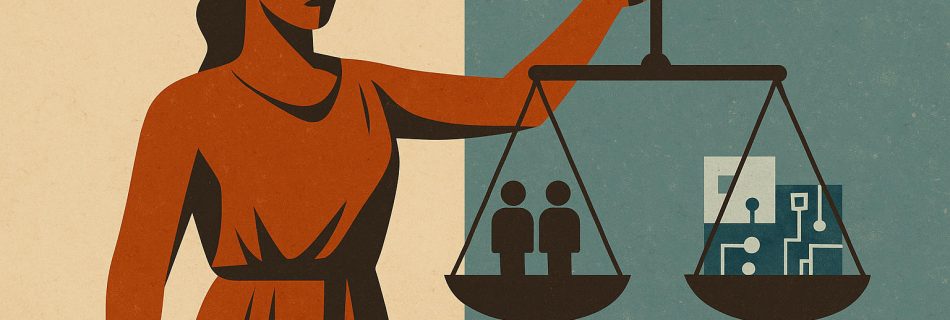
When algorithms inherit our history, who decides what justice looks like? Bias in AI is often described as a technical flaw — a bug to be ironed out. But this framing is misleading. Bias is not a glitch; it is a mirror. AI systems learn from data shaped by human choices, cultures, and institutions. In …