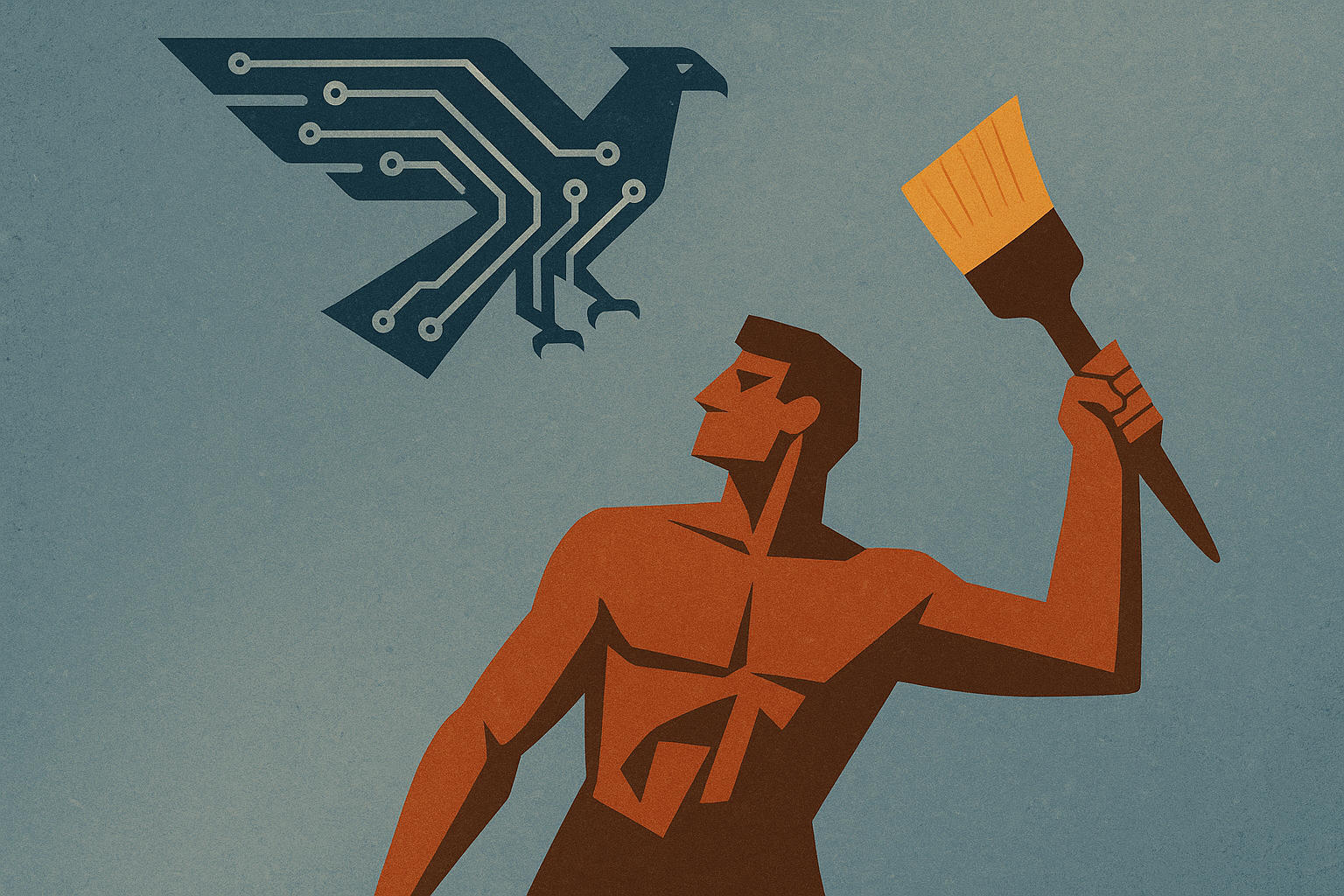
Originality is often defined as the ability to think independently and creatively or the quality of being novel or unusual.
The myth of originality stems from the idea that thoughts and creations are wholly unique, and that certain ideas would never have existed without the specific individual responsible for them.
Yet arguably, there are very few ideas that haven’t been shaped, consciously or unconsciously, by what came before.
And even if human creations are influenced by a predecessor of sorts, no matter how slow change is, something distinct can eventually be produced. The problem is, who’s to say when that point has been reached?
Compare music of the Renaissance to today’s charts for example. But no doubt you could find a natural progression from A to B.
Continuing in that vein, one could claim that entire genres of music sound the same, while another would recognise distinctive artists who stand out within them. What feels original to one person may seem derivative to another.
And given that humans are natural pattern-seekers, finding connections even where none objectively exist, perhaps the concept of originality is less universal truth and more psychological impression. If originality exists, it may be meaningful only at the level of individual experience.
But how does an intelligent system, trained on over a petabyte of data, interpret the myth of originality?
AI Introduction
Every act of creation draws on what came before. So why expect AI to be different?
Originality is often seen as the hallmark of creativity — the idea that true art or innovation must be wholly new, springing forth from nothing. Yet history tells a different story. Most human creativity is built on tradition, remix, and dialogue with the past. AI, in making this process more visible, challenges the very myth of originality.
Human Creativity Has Always Been Derivative
- Artistic schools and styles: Renaissance painters drew from shared techniques and themes.
- Music and literature: from folk ballads to epic poetry, works were copied, adapted, and retold across generations.
- Science and technology: each discovery builds on previous insights, often in small, incremental steps.
Far from undermining creativity, this continuity gives it depth. Originality is rarely absolute — it is relational.
What AI Reveals
AI systems learn by analysing vast datasets of human work. Their outputs are combinations, variations, and reconfigurations of what already exists. This is often criticised as unoriginal. But in practice, the process is not so different from how humans create — the difference is that AI makes the remix explicit, rather than hidden behind individual memory and experience.
The Illusion of the “Spark”
Humans often describe creativity as a sudden flash of inspiration. Yet this “spark” usually follows long periods of learning, practice, and exposure. What looks like originality is often the recombination of influences too subtle or unconscious to trace. AI reminds us that the boundary between inspiration and imitation has always been porous.
Why It Matters
If we cling to a rigid notion of originality, AI creativity seems counterfeit. But if we see creativity as a conversation with the past, then AI is simply another participant in that dialogue. The myth of originality tells us more about our cultural ideals than about the reality of how ideas emerge.